

Winter can be one of the most demanding seasons for trees across the UK. Heavy rainfall, strong winds, freezing temperatures and reduced daylight all place additional stress on trees, particularly those growing near houses, roads and property boundaries. While trees may appear dormant at this time of year, winter is actually a critical period for inspection, maintenance and forward planning.
January is an ideal time for homeowners to take stock of their trees and address any potential safety concerns before spring growth begins. Below, Foxes Tree Services answers some of the most common winter tree care questions we receive from UK homeowners.
Is Winter the Best Time to Inspect or Quote Tree Work?
Yes — winter is widely regarded as one of the best times of year to inspect trees and arrange quotes for tree work. Once deciduous trees have shed their leaves, their structure becomes far more visible, allowing issues to be identified more easily.
Winter inspections can reveal:
-
- Dead, dying or diseased branches
- Cracks, splits or weak branch unions
-
- Signs of decay within the trunk
- Structural imbalances or excessive weight

Many types of pruning are also best carried out while trees are dormant, as this reduces stress and encourages healthy regrowth in spring. From a practical point of view, winter is often a quieter time for gardens, making access easier and helping homeowners plan work ahead of the busier spring and summer months.
Can Very Wet Ground Conditions Cause a Tree to Fall Over?
Yes, very wet ground conditions can significantly increase the risk of trees falling over. Prolonged rainfall can lead to waterlogged soil, which weakens the tree’s anchorage by reducing the soil’s grip on the root system.
This risk is particularly high for:
-
- Large or mature trees
-
- Shallow-rooted species
-
- Trees growing in clay-heavy soils
- Trees that already lean or show signs of instability
- Trees growing in clay-heavy soils

When saturated ground is combined with strong winter winds, even healthy-looking trees can fail. Regular monitoring during periods of heavy rain can help identify warning signs early, such as soil lifting around the base or sudden changes in the tree’s position.
How Do I Reduce the Risk of Storm Damage to My Trees?
Reducing storm damage starts with proactive tree care. Well-maintained trees are far more resilient to harsh winter weather than neglected ones.
Key steps include:
-
- Removing dead, damaged or diseased branches
-
- Reducing overly dense canopies so wind can pass through more easily
-
- Addressing structural weaknesses before they worsen
- Ensuring trees are balanced and not carrying excessive weight on one side
- Addressing structural weaknesses before they worsen

Professional tree pruning and maintenance not only improve safety but also support the long-term health of the tree. Taking action before storms hit is far safer — and often far more cost-effective — than dealing with emergency tree damage afterwards.
Should I Check My Trees After Strong Winds?
Yes, trees should always be checked after strong winds or storms. Even if no damage is immediately obvious, hidden problems can develop that pose a risk later on.
Things to look out for include:
-
- Broken or hanging branches caught in the canopy
-
- Fresh cracks or splits in the trunk or major limbs
-
- Bark damage or exposed wood
- Trees that appear to have shifted, tilted or begun leaning
- Bark damage or exposed wood

Any damaged or unstable branches can fall without warning, creating a serious hazard for people, vehicles and property below. If you notice anything unusual or are unsure about a tree’s condition, a professional inspection is strongly recommended.
How Often Should I Check the Trees on My Property?
As a general guideline, homeowners should visually inspect their trees:
-
- At least once or twice a year
-
- After periods of severe weather, such as storms or high winds
- Whenever noticeable changes occur, including leaf loss, dieback, fungal growth or leaning
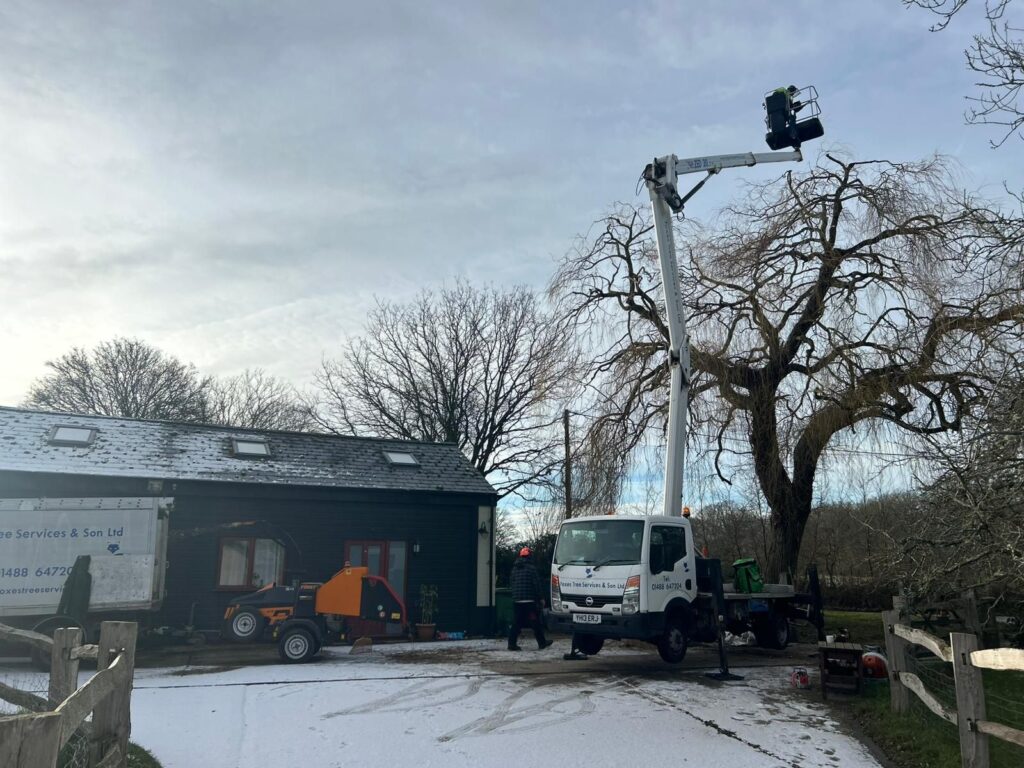
Trees located near buildings, footpaths or neighbouring properties should be monitored more closely. A professional tree inspection every few years — or more frequently for larger or higher-risk trees — can help identify problems early and maintain safety year-round.
Should I Put Mulch Around the Base of My Tree to Protect the Roots?
Yes, applying mulch around the base of a tree is highly beneficial, particularly during winter. Mulch acts as a protective layer, helping to regulate soil temperature and improve overall soil health.
Benefits of mulching include:
-
- Insulating roots from frost and cold temperatures
-
- Retaining moisture during dry winter spells
-
- Improving soil structure and nutrient content
-
- Reducing competition from weeds and grass

Mulch should be applied in a wide ring around the base of the tree, but it’s important to keep it clear of the trunk to prevent rot and pest problems. Organic materials such as woodchip or bark mulch are ideal.
Professional Winter Tree Care You Can Trust
Winter is the perfect time to ensure your trees are safe, stable and prepared for the year ahead. At Foxes Tree Services, we provide professional tree inspections, pruning and maintenance services for homeowners across the UK.
Whether you’re concerned about storm damage, waterlogged ground, or simply want peace of mind, our experienced team is here to help. Contact Foxes Tree Services today to arrange a winter tree inspection or no-obligation quote.